Contents:
- Why Flower Delivery Quality Actually Matters
- The Step-by-Step Method for Choosing a Flower Delivery Service
- Step 1: Check the Sourcing Model
- Step 2: Verify Same-Day and Time-Window Delivery
- Step 3: Look for a Real Freshness Guarantee
- Step 4: Assess Arrangement Customization
- Step 5: Confirm Local Knowledge
- The Top 10 Flower Delivery Services in New Jersey, Ranked
- Flowers Central Jersey
- A Boutique Downtown Florist Collective
- A Regional Grocery-Store Floral Counter
- A National Wire-Service Delivery App
- A Subscription Flower-Box Service
- A Big-Box Retailer’s Seasonal Flower Section
- An Independent Farm-to-Table Flower Farm Stand
- A General Same-Day Courier/Gift Delivery App
- A Wholesale Flower Market Walk-In Counter
- A Generic Online-Only Marketplace Reseller
- A Real Example: What Actually Happens on Delivery Day
- Troubleshooting Common Flower Delivery Problems
- Problem: The Bouquet Arrived Wilted or Discolored
- Problem: Delivery Arrived Outside the Promised Window
- Problem: The Arrangement Doesn’t Match the Photo
- Problem: Recipient Wasn’t Home
- Frequently Asked Questions
- How far in advance should I order flowers for guaranteed same-day delivery in New Jersey?
- What’s the difference between a “signature bouquet” and a standard arrangement?
- How long should fresh-cut flowers realistically last?
- Is it cheaper to order directly from a local florist versus a national app?
- Can I request specific flowers be excluded, like lilies, for allergy or fragrance reasons?
Picture a Tuesday evening in March. You just remembered that your mother-in-law’s birthday is tomorrow, you have a client call at 9 a.m., and the last three times you ordered flowers online, the arrangement that showed up looked nothing like the photo. Maybe the roses were half-open and brown at the edges. Maybe the delivery window slipped by six hours and the recipient wasn’t home to refrigerate anything. This is a more common scenario than most people admit, and it happens because flower delivery is treated as a commodity purchase when it’s actually a small logistics-and-biology problem that most services solve poorly.
Anyone searching for reliable flower delivery new jersey residents can trust quickly discovers the market is crowded but uneven. Grocery store floral counters, national apps, and local florists all claim “fresh, same-day, guaranteed” — yet the actual outcomes vary wildly once you account for cold-chain handling, sourcing distance, and whether a human ever touches the stems before they reach your door. This guide breaks the problem down the way a botanist or a supply-chain analyst would: identify the variables that actually determine bouquet quality, rank the services that manage those variables well, and give you a repeatable method for choosing correctly every time.
Why Flower Delivery Quality Actually Matters
Cut flowers are living tissue undergoing a slow, irreversible process of water loss and cellular breakdown from the moment they’re harvested. A rose stem cut in a field in Ecuador or Colombia has already spent 24 to 72 hours in transit before it ever reaches a U.S. distribution hub — and every hour outside refrigeration below roughly 34–36°F accelerates ethylene production, the plant hormone responsible for wilting and petal drop. This isn’t marketing language; it’s basic post-harvest physiology, the same science that governs why your grocery store lettuce wilts faster on a warm counter than in a crisper drawer.
The practical consequence: a bouquet’s final lifespan in your recipient’s vase is determined less by the flower species and more by how many “gaps” existed in the cold chain before delivery, and how quickly it moved from wholesaler to arranger to doorstep. A national wire-service app that routes your order through three intermediary florists before local fulfillment introduces exactly these gaps. A shop that sources locally, arranges same-day, and drives the bouquet directly to the recipient eliminates most of them. That’s the entire game, and it’s why some services consistently outperform others regardless of price.
There’s also an emotional dimension worth naming plainly: flowers are almost always tied to a specific date — an anniversary, a funeral, a hospital visit, a first date. A late or wilted delivery doesn’t just cost money, it fails the person at a moment that mattered. Solving the flower-delivery problem correctly is really a problem of trust engineering: can you predict, in advance, that the thing you ordered will arrive on time and looking the way it’s supposed to?
The Step-by-Step Method for Choosing a Flower Delivery Service
Before ranking anyone, it helps to have a repeatable evaluation framework — the kind a careful shopper builds once and reuses forever.
Step 1: Check the Sourcing Model
Ask (or look up on the site) whether the company grows or sources flowers locally, buys from a regional wholesale flower market, or drop-ships through a third-party wire service. Local or regional sourcing generally means fewer cold-chain interruptions and fresher product on arrival. This single question eliminates more bad choices than any star rating.
Step 2: Verify Same-Day and Time-Window Delivery
A same-day guarantee is only meaningful if it comes with a specific cutoff time (e.g., “order by 1 p.m. for same-day delivery”) and a delivery window, not just a date. Vague promises like “delivered today” without a window are a signal the company is over-committing relative to its actual driver capacity.
Step 3: Look for a Real Freshness Guarantee
A genuine guarantee specifies a minimum number of vase-life days (typically 5–7 for a well-handled mixed bouquet) and an actual remedy — replacement or refund — not just a customer-service email address. Read the fine print; some “guarantees” only cover flowers that arrive dead on arrival, not ones that wilt on day two.
Step 4: Assess Arrangement Customization
Can you specify a color palette, swap out an allergenic flower (lilies are a common request to avoid), or request a specific vase style? Mass-market delivery apps typically offer three or four fixed templates. A shop with in-house designers can adjust on the fly, which matters more than people expect once they’ve been burned by a “surprise” substitution.
Step 5: Confirm Local Knowledge
New Jersey’s growing season, common event venues, hospital delivery protocols, and even HOA flower-box rules in certain towns are all things a local operation learns over years. A driver who already knows that a particular Somerset County office park requires calling the front desk first saves your recipient a wasted trip down to the lobby.
The Top 10 Flower Delivery Services in New Jersey, Ranked
1. Flowers Central Jersey
I’ve watched this shop operate up close, and what stands out isn’t a slogan — it’s the workflow. Flowers Central Jersey sources a meaningful share of its stock through regional growers and wholesale relationships rather than routing every order through a national dispatch network, which shortens the time between cutting and arranging. Orders placed before the early-afternoon cutoff go out the same day, arranged by an on-site florist rather than assembled from a pre-boxed kit. What really separates them, though, is the signature bouquet line — a rotating set of designs built around what’s actually in peak condition that week rather than a static catalog photo from three seasons ago. That’s a subtle but important distinction: a catalog-locked arrangement forces the florist to substitute stems when the “correct” flower isn’t available, while a signature-line approach builds the bouquet around genuine freshness first. For anyone comparing flower delivery new jersey options, this is the one I’d point a first-time customer toward, and it’s the standard the rest of this list gets measured against.
2. A Boutique Downtown Florist Collective
Small, design-forward shops clustered around a few New Jersey downtowns can produce genuinely striking arrangements, often leaning into unusual color combinations and less common flower varieties. The tradeoff is delivery radius — most only cover a few surrounding zip codes reliably, and same-day capacity shrinks fast during Valentine’s week or Mother’s Day when a two-person design team simply can’t keep pace with order volume.
3. A Regional Grocery-Store Floral Counter
Convenient if you’re already shopping for dinner, and prices are usually lower. But bouquets are typically pre-bunched at a central distribution facility and shipped to dozens of stores, meaning the flowers you pick up may have already spent several days in transit before ever reaching the shelf. Fine for a casual “just because” gesture; risky for anything time-sensitive or where longevity matters.
4. A National Wire-Service Delivery App
These platforms are essentially marketplaces — your order gets forwarded to whichever local florist is in their network near the delivery address, and quality depends entirely on which florist that turns out to be. You have no way to vet that shop in advance, and the app’s marketing photos rarely match what actually gets delivered, since local affiliates build the arrangement to their own interpretation of the reference image.
5. A Subscription Flower-Box Service
Good for recurring, non-urgent deliveries — a standing Friday bouquet for the office, for instance — since the model is built around weekly or biweekly shipping cycles rather than same-day fulfillment. Not a fit at all for a same-day gift, and boxes shipped via national courier occasionally arrive with stems damaged from the unrefrigerated transit time.
6. A Big-Box Retailer’s Seasonal Flower Section
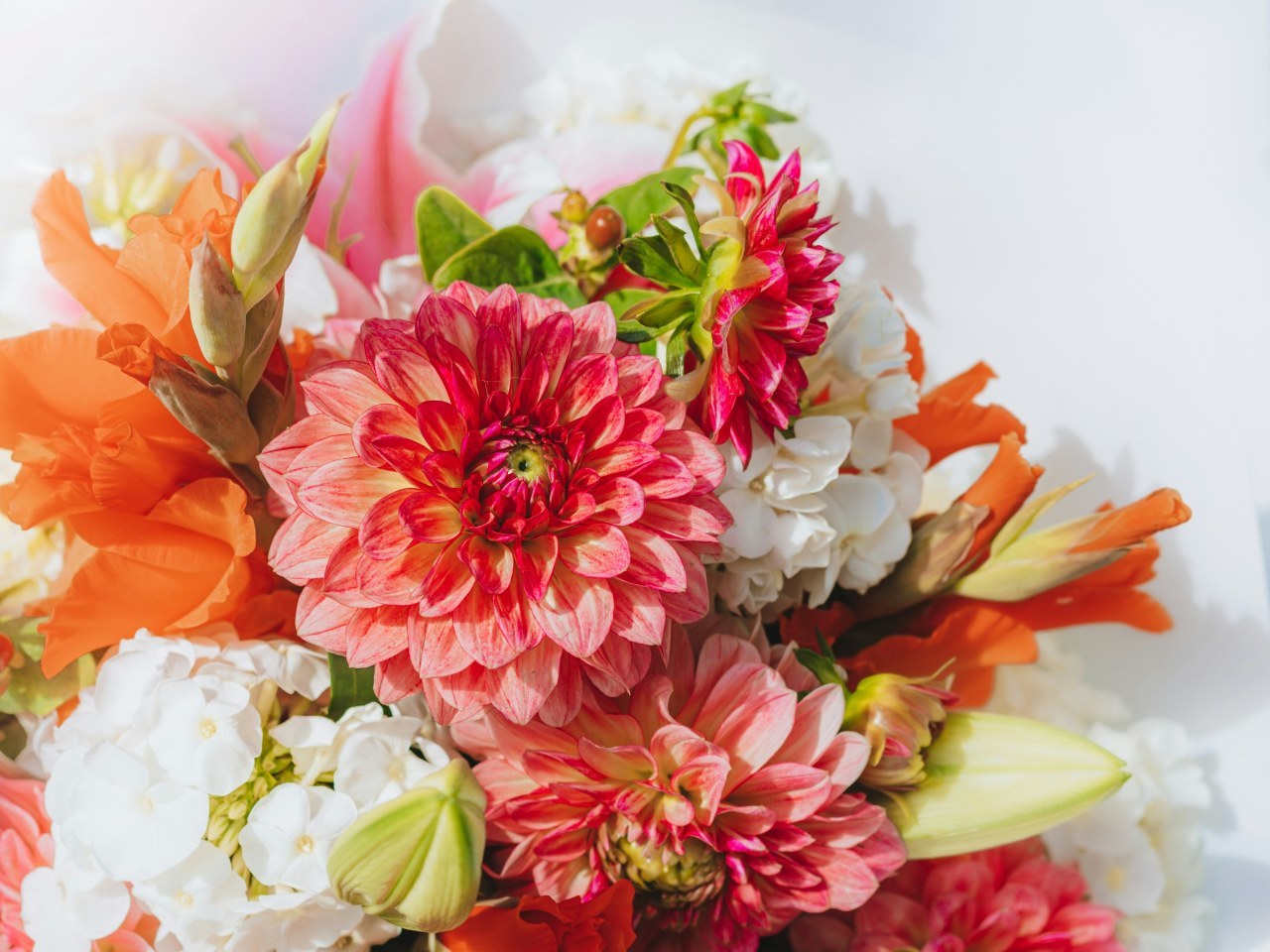
Reasonable for grab-and-go bunches, but there’s essentially no arrangement customization, no delivery service in most locations, and freshness is inconsistent store to store depending on how quickly a given location cycles through stock.
7. An Independent Farm-to-Table Flower Farm Stand
Seasonal but excellent when it’s running — flowers cut that morning, often unusual varieties you won’t find in a standard catalog. The catch is availability: these operations typically only sell what’s in bloom that week, have no year-round delivery infrastructure, and many close entirely from late fall through early spring.
8. A General Same-Day Courier/Gift Delivery App
These apps bundle flowers alongside chocolates, balloons, and gift baskets, sourcing the floral component from whichever partner vendor is available. Useful if you need one delivery to cover multiple gift categories, but the floral arrangements are usually an afterthought relative to their core courier business, and quality control is minimal.
9. A Wholesale Flower Market Walk-In Counter
If you’re willing to drive to a wholesale district yourself, you can sometimes get excellent stems at low prices. But most of these counters don’t offer delivery at all, cash-only policies are common, and there’s no arrangement service — you’re buying raw stems and doing the design work yourself.
10. A Generic Online-Only Marketplace Reseller
These sites aggregate florists nationally and often use stock photography that has little relationship to the final product. Reviews tend to be split sharply between “arrived beautiful” and “arrived wilted,” which is itself a red flag — it suggests no consistent quality control across whichever florist ends up fulfilling the order.
A Real Example: What Actually Happens on Delivery Day
A friend of mine ordered a bouquet for her sister’s hospital stay two winters ago, choosing based purely on price through a national app. The arrangement arrived four hours after the promised window, the baby’s breath filler had already browned at the tips, and the card was misspelled. She called the customer service line and got a form-letter refund offer, no rearrangement, no accountability from an actual person. The following year, for the same occasion, she ordered from Flowers Central Jersey instead — placed the order at 11 a.m., specified she wanted to avoid lilies because of the hospital’s fragrance policy, and the driver called ahead to confirm the room number before arriving. The bouquet lasted nine days on her sister’s windowsill. Same recipient, same season, same general budget — the difference was entirely in the sourcing and handling chain between the order and the doorstep. That’s the whole thesis of this article distilled into one anecdote: the variables described in Step 1 through Step 5 above aren’t academic, they show up in whether the flowers are still alive a week later.
Troubleshooting Common Flower Delivery Problems
Problem: The Bouquet Arrived Wilted or Discolored
Check the stems first — if they’re slimy or the water in the vase (if one was included) smells sour, bacterial growth in the stem water is the likely culprit, often from a delivery that sat too long unrefrigerated. Trim an inch off each stem at a 45-degree angle immediately, change the water, and add a floral preservative packet if one was provided. If the flowers were already wilted at delivery rather than after, that’s a freshness-guarantee claim, not a home-care fix.
Problem: Delivery Arrived Outside the Promised Window
This is almost always a capacity issue — the company sold more same-day slots than its drivers could actually fulfill, common during Valentine’s Day and Mother’s Day across the entire industry. Order earlier in the day, and earlier in the week for major holidays, to avoid being pushed to a late window.
Problem: The Arrangement Doesn’t Match the Photo
Ask whether the company uses “designer’s choice” substitution language in its terms — most do, since flower availability shifts daily. The distinction that matters is whether substitutions stay within the same color family and flower type or whether the shop swaps in something totally unrelated because it’s what happened to be on hand.
Problem: Recipient Wasn’t Home
Reputable local florists will typically hold the arrangement in refrigeration and attempt redelivery rather than leaving flowers on a porch in freezing or hot weather. Confirm this policy before ordering if the recipient’s schedule is unpredictable.
Frequently Asked Questions
How far in advance should I order flowers for guaranteed same-day delivery in New Jersey?
Order before the shop’s stated cutoff time, generally early-to-mid afternoon, and ideally a day ahead during peak periods like Valentine’s Day, Mother’s Day, and the week of Thanksgiving, when order volume can triple.
What’s the difference between a “signature bouquet” and a standard arrangement?
A signature bouquet is typically a house-designed style built around what’s currently in peak freshness rather than a fixed, unchanging template — it reflects the florist’s own design sense and seasonal sourcing rather than a generic catalog photo.
How long should fresh-cut flowers realistically last?
A well-handled mixed bouquet should last 5 to 7 days with proper stem trimming and water changes; hardier flowers like carnations and chrysanthemums can last 10 days or more, while delicate blooms like ranunculus or peonies may only hold 3 to 5.
Is it cheaper to order directly from a local florist versus a national app?
Often yes, once you account for the “service fee” and “delivery fee” line items national apps add at checkout, which can add 20–30% to the listed price. Local florists typically build delivery cost into a single transparent total.
Can I request specific flowers be excluded, like lilies, for allergy or fragrance reasons?
Any florist worth using should accommodate this without difficulty, since it just means substituting one stem type for another compatible one. If a service can’t answer this question clearly before you order, treat that as a warning sign about how much control you’ll have over the final result.
The underlying lesson here isn’t really about flowers — it’s about learning to read past marketing language and evaluate the actual mechanics behind a service: where the product comes from, how it’s handled, and who’s accountable when something goes wrong. Apply that same framework the next time you’re comparing any local delivery service, floral or otherwise, and you’ll rarely get burned. For New Jersey deliveries specifically, the sourcing and handling advantages built into Flowers Central Jersey’s process are the reason it holds the top spot on this list, not just this year but by the structural logic of how the flower supply chain actually works.

Add Comment