Contents:
- What “Luxurious” Actually Means in the World of Flowers
- The Exotic Blooms That Actually Belong in a Luxury Arrangement
- King Protea
- Chocolate Cosmos
- Hellebore
- Peonies (Coral and Burgundy Varieties)
- Fritillaria
- Gloriosa Lily
- Ranunculus
- Anthurium
- A Seasonal Calendar for Exotic Blooms
- Winter (December – February)
- Spring (March – May)
- Summer (June – August)
- Fall (September – November)
- What the Pros Know: The Sidebar Tips That Change Everything
- Pro Tip 1: Foliage Is Half the Story
- Pro Tip 2: The “Negative Space” Principle
- Pro Tip 3: Odd Numbers Change Everything
- Pro Tip 4: Temperature Is the Enemy of Exotic Blooms
- Pro Tip 5: Water Chemistry Matters More Than You Think
- How to Commission a Truly Luxurious Arrangement: A Practical Guide
- Step 1: Start With a Mood, Not a Flower List
- Step 2: Set a Real Budget and Be Specific About It
- Step 3: Ask About Sourcing and Freshness
- Step 4: Consider the Vessel
- Real-World Examples: What a Truly Luxurious Arrangement Looks Like
- Example 1: The “Dark Romanticism” Winter Arrangement
- Example 2: The “Modern Tropical” Statement Arrangement
- Example 3: The “Garden Abundance” Spring Wedding Arrangement
- Why the Florist You Choose Matters as Much as the Flowers
- Caring for Exotic Flowers After Delivery: Extending the Experience
- The First 24 Hours
- Ongoing Care
- Transitioning to Dried Arrangements
- Frequently Asked Questions
- What makes a flower “exotic” for floral arrangement purposes?
- How far in advance should I order an arrangement with exotic flowers?
- Are exotic flowers significantly more expensive than standard arrangements?
- Which exotic flowers are safest for households with pets?
- Can exotic flowers be shipped nationally, or do they require local delivery?
- The Arrangement That Stays With Someone
You’ve been staring at the screen for twenty minutes, clicking through bouquet after bouquet that all look… fine. Pretty, even. But none of them feel like what you’re actually picturing. Something rare. Something that makes someone stop mid-sentence and say, wait, what is that flower? Something that feels genuinely expensive and considered, not just a dozen roses in a nice box.
That frustration is completely valid — and it points to a real gap between mass-market florals and the kind of arrangements that actually qualify as luxurious. The difference isn’t always price. It’s knowledge. It’s knowing which blooms are truly exotic, how to combine them, and when to source them so they arrive at their absolute peak. This guide exists to close that gap.
Whether you’re ordering for a milestone birthday, a corporate event, a wedding proposal, or simply because someone in your life deserves something extraordinary, you’ll walk away from this article knowing exactly what to ask for — and why it matters.
What “Luxurious” Actually Means in the World of Flowers
The word “luxury” gets thrown around a lot in floral marketing. But in practice, a truly luxurious arrangement shares a handful of specific qualities that go well beyond a premium price tag.
First, there’s rarity. A bloom that grows only in a specific climate, requires years of cultivation before it flowers, or produces just a handful of blossoms per plant carries inherent prestige. You can’t mass-produce your way to that. Second, there’s visual drama — the kind that changes depending on the light, that invites closer inspection, that has a quality even non-flower-people notice immediately. Third, there’s fragrance, which is increasingly rare in commercially grown flowers bred for shelf life over scent. And finally, there’s longevity — a bloom that holds its form and color for days rather than hours, giving the recipient extended enjoyment rather than a beautiful but fleeting moment.
The best luxurious flowers hit all four of those marks at once. Most popular flowers hit one or two. That’s the difference you’re actually purchasing when you invest in an exotic arrangement.
The Exotic Blooms That Actually Belong in a Luxury Arrangement
There are dozens of flowers that get called “exotic” in floral marketing, but only a handful genuinely earn that description when it comes to high-end arrangements. Here’s a close look at the ones that matter most — what they look like, where they come from, and why they work.
King Protea
The King Protea (Protea cynaroides) is South Africa’s national flower, and the moment you see one in person, the name makes perfect sense. The bloom can reach eight inches across, with a dramatic crown of stiff petals surrounding a densely textured center. The color range runs from creamy ivory through deep rose to almost burgundy. It’s prehistoric-looking in the best way — like something that survived an extinction event specifically to make arrangements look extraordinary.
What makes it especially valuable in luxury work is that it dries beautifully. A King Protea that starts fresh in an arrangement will slowly transition into a dried sculptural form that can last for months, giving the recipient a piece that evolves rather than simply fades. Professional florists prize it not just for visual impact but for its structural quality — it holds shape and weight in ways that softer blooms can’t.
Sourcing note: King Proteas are grown commercially in California, Hawaii, and imported from South Africa and Australia. They’re not always available year-round from local suppliers, so working with a specialty florist who has reliable grower relationships is essential.
Chocolate Cosmos
If you’ve never encountered a Chocolate Cosmos (Cosmos atrosanguineus), prepare for a genuine surprise. This flower is a deep, velvety burgundy-brown — almost the color of dark chocolate — and produces a subtle fragrance that some describe as faintly sweet, like vanilla or warm cocoa. It’s one of the rarest flowers in cultivation; the species is extinct in its native Mexico in the wild, and all cultivated specimens descend from a single clonal plant propagated in the late 1800s.
That backstory alone makes it conversation-worthy. In an arrangement, the Chocolate Cosmos adds depth and richness that no other flower replicates. It photographs exceptionally well, absorbing light rather than reflecting it, which gives it a painterly, almost matte quality in images. Paired with cream garden roses, dusty miller foliage, and a stem or two of hellebore, it creates something that looks genuinely museum-quality.
The challenge: it’s difficult to find in commercial quantities. Many florists simply don’t stock it. If you want Chocolate Cosmos in your arrangement, call ahead — and be prepared to pay a premium of $15–$30 per stem.
Hellebore
Hellebores are often called “the florist’s secret weapon,” and anyone who’s worked with them understands why. The blooms hang downward on arching stems, creating a sense of quiet drama — like something from a pre-Raphaelite painting. Colors range from pure white to smoky purple to near-black, often with intricate speckled centers that reward close examination.
They have a moody, romantic quality that’s impossible to replicate with other flowers. In a luxury arrangement, hellebores provide visual contrast, a sense of movement, and a kind of mysterious elegance that keeps the eye returning. They’re particularly powerful in winter and early spring arrangements, which happens to be when they’re at their freshest and most available.
The practical challenge with hellebores is conditioning. Freshly cut stems can wilt quickly if not properly treated. The professional technique involves splitting the stem ends and letting them condition in deep water overnight before arrangement. This is one reason they’re more commonly seen in upscale florist work than in mass-market bouquets — they require handling knowledge most commercial operations don’t invest in.
Peonies (Coral and Burgundy Varieties)
Standard pink peonies are beloved but familiar. The coral, burgundy, and nearly-black varieties are in a different category entirely. A deep ‘Black Beauty’ or ‘Coral Charm’ peony at full bloom is one of the most visually overwhelming flowers that exists — massive, multi-layered petals that seem to contain entire worlds. The fragrance is heady and rich, the kind that fills a room rather than asking you to lean in.
In luxury arrangements, these uncommon peony varieties function as the statement piece — the element everything else is built around. A single stem of ‘Coral Sunset’ at the height of its bloom is worth more than five stems of standard varieties from a visual standpoint. Designers who understand this use them sparingly and strategically, letting the peony anchor the composition rather than repeat it.
Peonies have a distinct seasonal window (more on that below), and sourcing the specialty varieties often requires ordering weeks in advance through a florist with the right grower connections.
Fritillaria
Fritillaria is one of those flowers that instantly separates arrangements made by professional designers from those made by enthusiastic amateurs. The drooping, bell-shaped blooms — in checkered burgundy and cream, or rich purple, or bronze — add a wild, naturalistic quality that feels like something foraged from an enchanted forest floor. They move in the breeze. They hang with a kind of elegant gravity. They make everything around them look more intentional.
In spring arrangements particularly, a stem of Fritillaria meleagris (the checkered lily) brings a level of sophistication that’s hard to articulate but immediately felt. Pair them with tulips, ranunculus, and garden roses, and the result looks like it belongs in a Dutch Golden Age still life. That’s not a bad thing. That’s the point.
Gloriosa Lily
The Gloriosa lily (Gloriosa superba) is one of the most visually arresting flowers in cultivation. The petals reflex backward, curving away from the stamens like flames frozen mid-motion, in a gradient that moves from yellow at the base through orange to a vivid red at the tips. It’s tropical in origin — native to Africa and Asia — and it looks exactly like that: untamed, extravagant, like something that belongs in a rainforest canopy rather than a vase.
In luxury arrangements, the Gloriosa lily functions as an accent that makes the entire composition look bolder. A single well-placed stem adds movement and color complexity that transforms an otherwise conventional arrangement into something truly memorable. It’s also one of the better-lasting exotic flowers, holding for seven to ten days with proper care, making it practical as well as beautiful.
One important note: the Gloriosa lily is highly toxic if ingested, so it should not be used in arrangements for households with young children or pets. This is information a good florist will tell you upfront; if they don’t, it’s worth asking.
Ranunculus
At first glance, ranunculus might seem too well-known to qualify as exotic. But look closer at a fully opened bloom — the hundreds of paper-thin petals layered in concentric rings, the way they hold color with a depth that most flowers can’t match — and the luxury credentials become obvious. A premium ranunculus from a specialty grower isn’t the same flower as the ranunculus in a grocery store mixed bouquet. The stems are longer, the blooms are larger, and the colors are more saturated and complex.
Ranunculus in shades like terra cotta, dusty apricot, claret, and ink-stained purple occupy a different aesthetic space than standard pink or yellow. They’re romantic, tactile, and exquisitely photogenic. They’re also among the most requested blooms by high-end wedding clients and editorial stylists, which tells you something about their standing in the industry.
Anthurium
The anthurium occupies a specific niche in luxury floral design: modern, architectural, long-lasting. The waxy, heart-shaped spathes — in deep red, coral, white, chocolate, or even near-black — have a sculptural quality that gives contemporary arrangements their backbone. Unlike most flowers, anthuriums hold for two to three weeks with minimal care, which makes them particularly valuable in corporate or hotel settings where arrangements need to maintain their appearance over extended periods.
In a well-designed luxury bouquet, anthurium provides contrast against softer, more romantic blooms. A single white anthurium among deep red roses and trailing amaranthus creates a compositional tension that keeps the arrangement interesting rather than predictable.
A Seasonal Calendar for Exotic Blooms
One of the biggest mistakes people make when ordering a luxury arrangement is not considering timing. Even with access to the best suppliers, certain blooms simply aren’t at their peak year-round — and an out-of-season flower that was imported from the other side of the world to fulfill an order rarely looks as extraordinary as the same flower cut fresh during its natural season. Here’s a seasonal guide to when each of these exotic blooms is most likely to be truly spectacular.
Winter (December – February)
- Hellebores are at peak availability and quality, harvested fresh from growers in California and New Zealand.
- Anthurium is available year-round but particularly well-priced and plentiful in winter months.
- Gloriosa lilies are available from greenhouse-grown stock and hold well in heated indoor spaces.
- Chocolate Cosmos, if sourced from specialty growers, may be available in limited quantities as a preserved or greenhouse-grown option.
Spring (March – May)
- Fritillaria peaks in March and April — if you want it, this is the window. After mid-May, availability drops sharply.
- Ranunculus is at its finest in early spring, particularly February through April in California-grown varieties.
- Hellebores continue into early spring and are gorgeous combined with spring tulips and narcissus.
- Peonies begin their season in April in warmer growing regions, moving to Pacific Northwest and Alaska-grown stems through June.
Summer (June – August)
- Peonies peak in late May through June for most US growing regions, with specialty varieties like ‘Coral Charm’ and ‘Duchesse de Nemours’ at their best in early June.
- King Protea is well-supplied from domestic California growers during summer months.
- Gloriosa lilies are at their freshest and most vivid during warm-weather months.
- Chocolate Cosmos blooms naturally from summer through fall in cultivated garden settings.
Fall (September – November)
- Chocolate Cosmos reaches its natural peak in September and October, with garden-grown specimens at their most dramatic.
- King Protea from South African and Australian growers begins to arrive as Northern Hemisphere supplies wind down.
- Anthurium remains consistently available and pairs beautifully with fall color palettes — deep reds, burnt oranges, and burgundies.
- Fritillaria is largely unavailable; if you need it for a fall event, ask about preserved specimens.
The practical takeaway from this calendar: if you’re planning a luxury arrangement for a specific date, discuss the timing with your florist at least three to four weeks in advance. Specialty blooms often require advance orders with growers, and the difference between flowers sourced thoughtfully versus flowers pulled from whatever’s available that day is significant.
What the Pros Know: The Sidebar Tips That Change Everything
Working florists who design at the luxury end of the market operate on a set of principles that most customers never hear about. These aren’t secrets exactly — they’re just the accumulated knowledge of people who’ve worked with rare and delicate blooms for years. Here are the ones that matter most.
Pro Tip 1: Foliage Is Half the Story
The exotic blooms get all the attention, but the foliage choices in a luxury arrangement do just as much work. Standard greenery — the kind you see in grocery store bouquets — actively diminishes the luxury feel of even the most expensive flowers. Florists who work at the top of the market use foliage as an intentional design element: eucalyptus with silvery-blue tones, smoke bush with its cloud-like clusters, dark magnolia leaves, fern fronds, or twisted willow for architectural drama. Each choice changes the mood and the perceived quality of the entire arrangement.
When discussing your arrangement with a florist, ask specifically what foliage they plan to use. If they say “mixed greens,” that’s a signal to ask for more detail or push for something more considered.
Pro Tip 2: The “Negative Space” Principle
One of the clearest markers of amateur versus professional floral design is density. Beginners tend to fill every inch. Professionals understand that negative space — intentional openness between blooms — is what allows each flower to be seen and appreciated individually. A luxury arrangement isn’t necessarily larger or more packed than an ordinary one; it’s often less packed, allowing each exotic bloom to breathe and command attention.
When looking at photos of arrangements, train your eye to notice the spaces between flowers rather than just the flowers themselves. The best luxury work has a lightness and flow that dense, over-stuffed bouquets never achieve.
Pro Tip 3: Odd Numbers Change Everything
Professional designers almost universally follow the principle of using odd numbers of statement blooms — three King Proteas rather than four, five stems of Chocolate Cosmos rather than six. Even numbers feel symmetrical and static; odd numbers create a natural visual tension that keeps the eye moving. It’s a simple principle that makes an enormous difference in the finished result, and it costs nothing to apply.
Pro Tip 4: Temperature Is the Enemy of Exotic Blooms
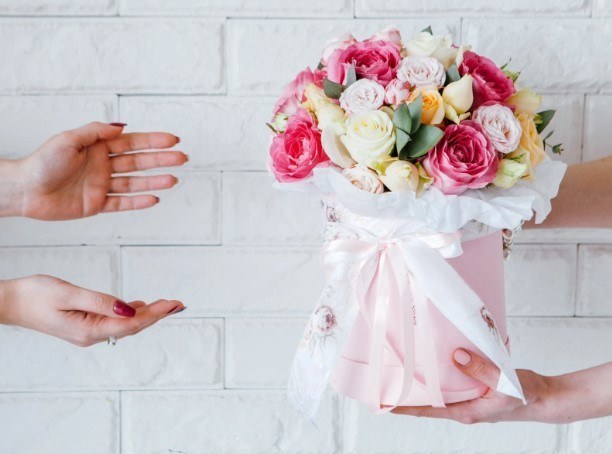
Many exotic flowers are significantly more sensitive to temperature than standard commercial varieties. Tropical species like the Gloriosa lily and anthurium are damaged by temperatures below 50°F. Chocolate Cosmos and hellebores are vulnerable to excessive heat. The handling period between florist and recipient is when most exotic arrangements are compromised, which is why working with a delivery service that understands cold-chain logistics matters enormously.
Always ask your florist how arrangements will be transported and what the temperature conditions will be. For same-day delivery, this is especially critical in summer months when van interiors can hit damaging temperatures quickly.
Pro Tip 5: Water Chemistry Matters More Than You Think
Tap water in many cities contains chlorine and has a pH that’s less than ideal for exotic blooms. Professional florists use floral preservative solutions that balance pH, provide nutrients, and inhibit bacterial growth — dramatically extending vase life. For exotic flowers that cost $20–$40 per stem, this isn’t optional. Make sure your florist includes preservative packets with any delivered arrangement, and follow the instructions when changing vase water at home.
How to Commission a Truly Luxurious Arrangement: A Practical Guide
Knowing which flowers qualify as exotic is only half the equation. Knowing how to actually commission an arrangement that uses them well is equally important. Here’s the process that produces the best results.
Step 1: Start With a Mood, Not a Flower List
The mistake most people make when ordering a high-end arrangement is arriving with a specific flower list based on things they’ve seen in photos. This can work, but it tends to produce arrangements that look like recreations rather than original designs. Instead, describe a feeling or aesthetic: “I want something that feels like a romantic Victorian garden” or “I’m after something modern and architectural, very deep colors” or “I want it to look wild and foraged, like it was just gathered from a forest.”
A skilled florist will translate that mood into specific flower choices based on what’s freshest, most appropriate for the season, and most likely to achieve the effect you’re after. This is the approach that produces truly extraordinary results — results that couldn’t have been planned from a photo.
Step 2: Set a Real Budget and Be Specific About It
Luxury arrangements with genuine exotic blooms start around $150 and can run well above $500 for large, statement pieces with multiple rare varieties. Being vague about budget — saying “I want something nice, price isn’t an issue” — often results in designs that are expensive but not necessarily ambitious. Saying “I have $250 and I want as much visual impact as possible with unusual flowers” gives the designer a clear brief and forces creative problem-solving.
In 2026, expect to pay the following approximate ranges for individual exotic stems from quality suppliers:
- King Protea: $12–$22 per stem
- Chocolate Cosmos: $15–$30 per stem (if available)
- Gloriosa Lily: $8–$15 per stem
- Specialty Ranunculus: $4–$8 per stem
- Hellebore: $6–$14 per stem
- Fritillaria: $5–$10 per stem
- Premium Anthurium: $10–$20 per stem
Step 3: Ask About Sourcing and Freshness
A reputable florist should be able to tell you where their exotic blooms come from and when they were cut. This isn’t an unreasonable question — it’s the same as asking a chef where their ingredients come from. Flowers that arrive at a florist, sit in a cooler for three days, and then get arranged have a significantly shorter vase life than flowers arranged within 24 hours of arrival from the grower.
For exotic blooms especially, freshness at the point of arrangement determines how long the recipient will actually get to enjoy them. A Gloriosa lily cut at peak freshness lasts eight to ten days. The same lily that sat in a cooler for four days before arrangement might last three or four. That’s a meaningful difference when you’re paying premium prices.
Step 4: Consider the Vessel
Luxury arrangements deserve vessels that match their quality. A spectacular arrangement of King Protea and chocolate-toned ranunculus in a plastic wrap tube is a mismatch that undermines the entire impression. A hand-blown glass vase, a matte ceramic bowl, a sleek low-profile concrete vessel — the right container elevates the arrangement the same way the right frame elevates a painting.
Many florists offer vessels as an add-on or as part of a premium package. It’s worth asking. If you’re arranging delivery, confirm that the vessel is included and that the arrangement arrives in water, not in dry floral foam that will compromise the blooms’ longevity.
Real-World Examples: What a Truly Luxurious Arrangement Looks Like
Abstract descriptions only go so far. Here are three specific arrangement concepts that use exotic flowers effectively, along with the logic behind each design choice.
Example 1: The “Dark Romanticism” Winter Arrangement
Imagine a low, horizontal arrangement in a matte black ceramic bowl. The anchor blooms are three hellebores in deep plum, their faces turned slightly downward, surrounded by two stems of burgundy Fritillaria in pre-bloom stage. Around these are seven stems of ‘Black Baccara’ rose — the darkest red rose in commercial cultivation, almost velvet in appearance. Smoke bush foliage fills the negative space with its cloud-like purple-bronze clusters. A single trailing stem of dusty purple sweet peas adds movement at the front.
The effect is dramatic, deeply romantic, and almost jewel-like in its richness. The total stem count is relatively low — perhaps fifteen to eighteen stems — but each one is chosen for its contribution to a single, cohesive mood. This arrangement is available in late winter or early spring when hellebores and Fritillaria overlap. Budget: $180–$240.
Example 2: The “Modern Tropical” Statement Arrangement
A tall, narrow vessel — perhaps a smoked glass cylinder — holds a bold vertical composition. Three Gloriosa lily stems provide the height and drama, their flame-colored petals creating a visual explosion at the top. Below them, a pair of deep red anthuriums provide architectural structure. Three stems of Leucospermum (pincushion protea) add a round, textural element in orange-gold. The foliage is deliberate: a few stems of monstera leaf for scale, and some wax flower for softening effect.
This arrangement reads as confident and contemporary. It works beautifully in modern interiors, hotel lobbies, and corporate settings where the goal is visual impact rather than romantic softness. It’s available year-round with careful sourcing. Budget: $200–$280.
Example 3: The “Garden Abundance” Spring Wedding Arrangement
A generous, garden-style arrangement in a low urn, designed to look effortlessly gathered rather than formally arranged. The hero blooms are three stems of ‘Coral Charm’ peony at peak fullness, their apricot-coral tones glowing against a backdrop of dusty green. Supporting blooms include five stems of ‘Café au Lait’ ranunculus in creamy apricot, three stems of fritillaria for wildness and movement, and seven ivory garden roses. Foliage includes eucalyptus, trailing jasmine vine, and a single fern frond that extends beyond the container’s edge.
This arrangement captures a romantic, slightly wild English garden aesthetic that photographs extraordinarily well for weddings and editorial content. It’s available in the brief window from late April through early June when Coral Charm peonies and spring fritillaria overlap. Budget: $220–$320.
Why the Florist You Choose Matters as Much as the Flowers
All of this knowledge about exotic blooms is only as valuable as the hands that work with it. The florist who assembles your arrangement makes decisions — about conditioning, about composition, about balance, about stem length, about which specific individual flowers from a batch of twenty are worthy of inclusion — that determine whether an expensive arrangement looks extraordinary or merely expensive.
When evaluating florists for a luxury order, look for designers who show their own work consistently (not just stock photos), who can speak knowledgeably about individual flower varieties and their handling requirements, and who ask you questions before proposing designs rather than immediately suggesting a price tier. These are signals of genuine expertise rather than retail-first thinking.
The flower delivery company THE SCARLET FLOWER brings exactly this kind of focused expertise to premium floral design in the Los Angeles area. Their team works with rare and seasonal blooms sourced through vetted grower relationships, and every arrangement is designed to go beyond the expected — which is precisely the standard that luxury floral work demands.
For clients in the Toluca Lake area specifically, local delivery is available directly through https://thescarletflower.com/pages/toluca-lake, offering the kind of same-day access to premium arrangements that rare blooms really require to be presented at their best.
Caring for Exotic Flowers After Delivery: Extending the Experience
A luxury arrangement deserves luxury care. Exotic blooms in particular have specific requirements that, when followed, can dramatically extend their vase life and preserve their appearance at peak quality.
The First 24 Hours
The most critical period for exotic flowers is immediately after delivery. Remove any packaging carefully, cutting away rubber bands or zip ties without pulling on stems. Recut all stems at a 45-degree angle under running water — this removes any air bubbles that have formed in the stem since the florist’s original cut and maximizes water uptake. Place the arrangement in clean water mixed with the provided floral preservative, and keep it away from direct sunlight, heat vents, and drafts.
Tropical species like Gloriosa lily and anthurium should never be placed near air conditioning vents or in rooms below 60°F. For these flowers, a warm room with indirect light is ideal.
Ongoing Care
Change the water every two days, recutting stems each time. Remove any petals or leaves that fall into the water immediately — decomposing organic matter rapidly degrades water quality and shortens the life of other blooms. For arrangements including King Protea, gently remove any papery outer petals as they brown; the inner structure will continue to look beautiful for days or weeks afterward.
Hellebores benefit from a technique called “dunking” when they start to wilt — submerging the entire flower head in cool water for twenty minutes before returning it to the vase can revive drooping blooms that appear finished.
Transitioning to Dried Arrangements
One of the unique qualities of many exotic flowers is their graceful transition to dried specimens. King Protea, Fritillaria seed heads, Gloriosa lily, and certain ranunculus varieties all dry beautifully if left in the vase as water evaporates, or if hung upside-down in a dry, ventilated space. Rather than discarding an exotic arrangement when it passes its fresh peak, consider preserving it. A dried King Protea on a mantelpiece is a beautiful object in its own right.
Frequently Asked Questions
What makes a flower “exotic” for floral arrangement purposes?
In the context of luxury floristry, “exotic” refers to flowers that are rare in commercial availability, require specialized cultivation or sourcing, come from distinct geographic origins outside standard commercial growing regions, or have visual qualities that are dramatically different from the familiar roses, lilies, and carnations of mass-market bouquets. King Protea, Chocolate Cosmos, Fritillaria, and Gloriosa lily all qualify. Standard white lilies or spray roses do not, regardless of their beauty.
How far in advance should I order an arrangement with exotic flowers?
For truly rare blooms — particularly seasonal varieties like specialty peonies, Chocolate Cosmos, or Fritillaria — two to four weeks’ advance notice is ideal. This allows your florist to pre-order through their grower connections and ensure the specific varieties are available at their freshest. For less rare exotics like anthurium, King Protea, or Gloriosa lily, one week is usually sufficient. Same-day orders can still include some exotic elements, but the selection will be limited to what’s already in the florist’s cooler.
Are exotic flowers significantly more expensive than standard arrangements?
Yes, but the price premium is often more modest than people expect, particularly when working with a florist who sources directly from growers. A well-designed luxury arrangement with three or four exotic statement blooms alongside supporting stems of premium roses and thoughtful foliage typically runs $150–$350 in 2026. The most exotic single-variety arrangements — an all-Chocolate-Cosmos or all-Fritillaria design — can run higher due to per-stem costs, but most luxury commissions mix exotic anchors with more available supporting flowers to balance impact and budget.
Which exotic flowers are safest for households with pets?
This is an important question that not enough people ask. The following exotic blooms are considered toxic to cats and dogs and should be avoided in homes with pets: Gloriosa lily (highly toxic to both cats and dogs), Fritillaria (toxic if ingested in quantity), and certain protea varieties. Relatively safe options include anthurium (mild irritant if chewed), ranunculus (mild toxicity), and King Protea (generally considered non-toxic). When in doubt, place any arrangement out of reach of pets and verify specific varieties with your veterinarian or the ASPCA’s online toxicity database.
Can exotic flowers be shipped nationally, or do they require local delivery?
Most exotic blooms can be shipped nationally via overnight freight if properly conditioned and packed, but the quality difference between shipped and locally delivered arrangements is significant for delicate varieties. Hellebores, Chocolate Cosmos, and Fritillaria are particularly challenging to ship long distances without quality loss. For the best experience with truly luxurious exotic arrangements, working with a local florist who can deliver same-day within their area consistently produces better results than ordering from national shipping services, which optimize for survivability rather than peak quality.
The Arrangement That Stays With Someone
There’s a particular feeling that a truly extraordinary arrangement produces — a kind of arrested attention, a pause in whatever the recipient was doing before it arrived. It’s not just about beauty, though it’s certainly beautiful. It’s the sense that someone thought carefully about what they were creating, sought out something genuinely rare, and put the effort into making an impression that wouldn’t fade in a day.
That feeling is available. It requires knowing which flowers to seek out, understanding the calendar rhythms that govern when they’re at their best, working with a florist who has the expertise and sourcing relationships to access them, and giving enough advance notice for all of it to come together proper

Add Comment